Rubber hoses: why they remain the most versatile industrial solution
Rubber hoses continue to be one of the most widely used solutions in industry for the transfer
of fluids, gases and bulk materials. Their combination of flexibility, mechanical strength and adaptability
to different operating conditions makes them a key component in many industrial installations.
A properly selected rubber hose offers excellent resistance to abrasion, vibrations,
impacts and movement, making it especially suitable for applications where rigid piping is not viable
or presents operational limitations.
Types of industrial rubber hose by application
Industrial rubber hoses are designed according to the application and the product to be conveyed.
In practice, the most useful classification is based on real use within the installation:
- Food-grade rubber hoses, for suction and delivery of liquid and semi-liquid products.
- Steam hoses, designed to operate at high temperatures and pressures.
- Chemical hoses, intended for broad compatibility with industrial chemicals.
- Rubber hoses for hydrocarbons and fuels.
- Rubber hoses for abrasive materials and solids in suspension.
- Rubber hoses for water and air, for general industrial and service applications.
This wide range of applications explains why industrial rubber hoses remain a reference solution
across many different industrial sectors.
How to select industrial rubber hoses safely
Proper selection of an industrial rubber hose is essential to ensure system safety
and durability. Not all rubber hoses perform the same way under identical operating conditions.
Some of the key selection criteria to consider include:
- Type of product and chemical compatibility of the compound.
- Working pressure and possible pressure peaks.
- Temperature of the fluid and the environment (especially for steam or bitumen).
- Use in delivery or suction (vacuum conditions).
- Abrasion, bend radius and environmental conditions.
A prior technical assessment helps prevent premature failures, production downtime and unnecessary risks.
Structure of an industrial rubber hose
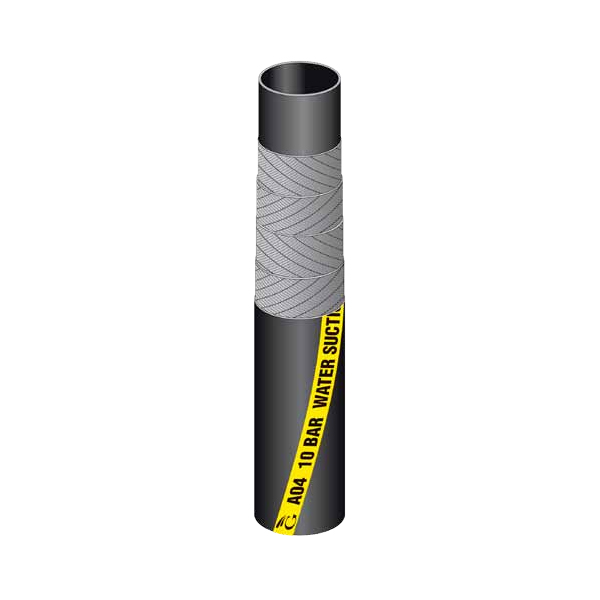
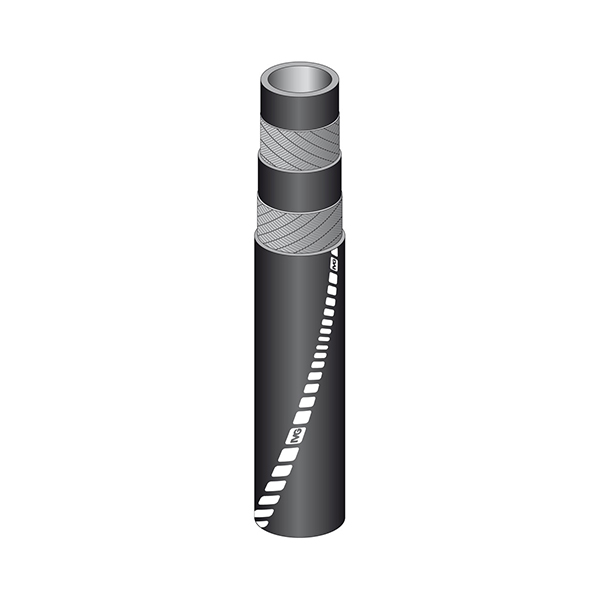
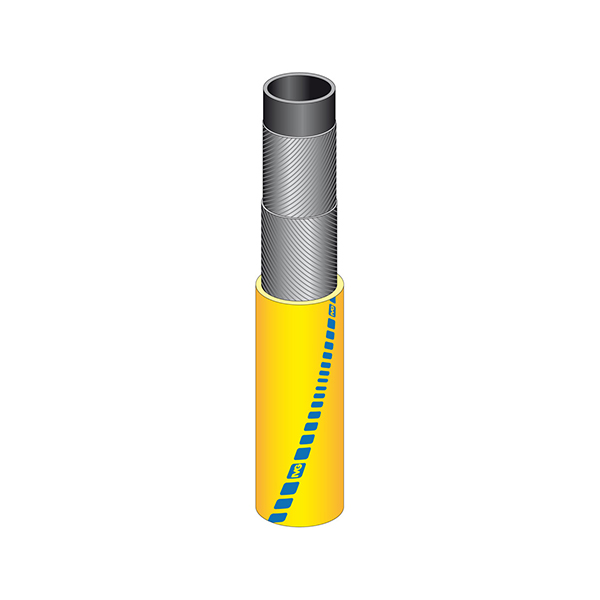
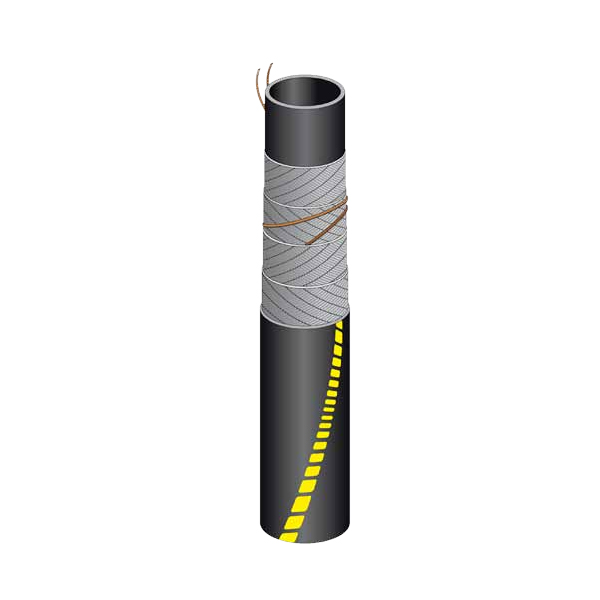
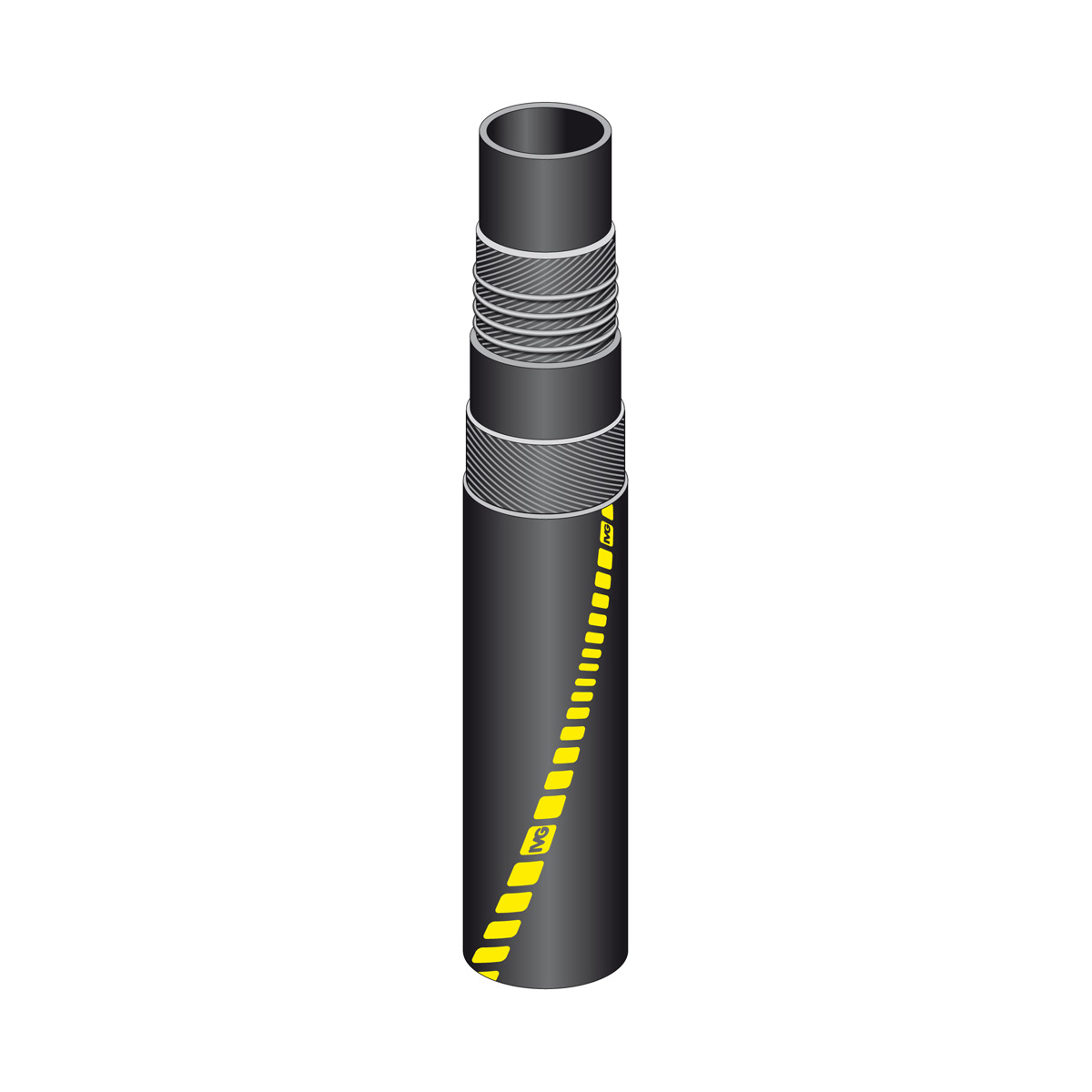
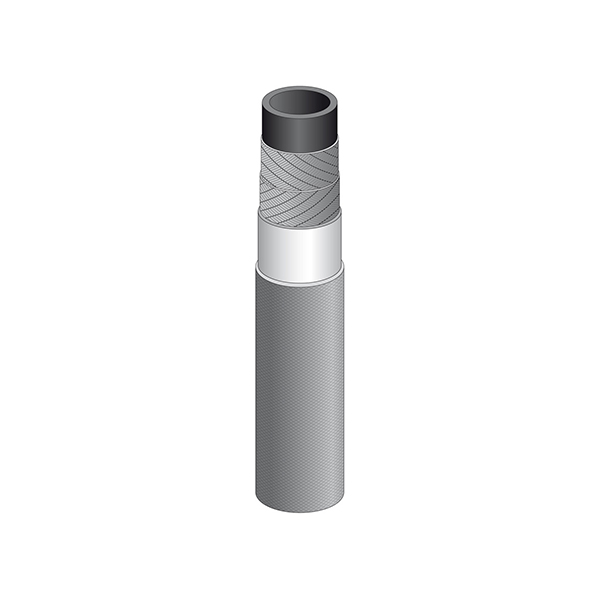
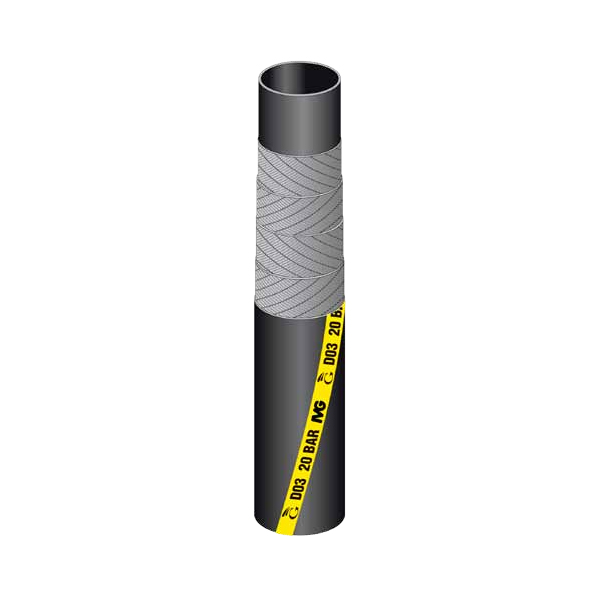
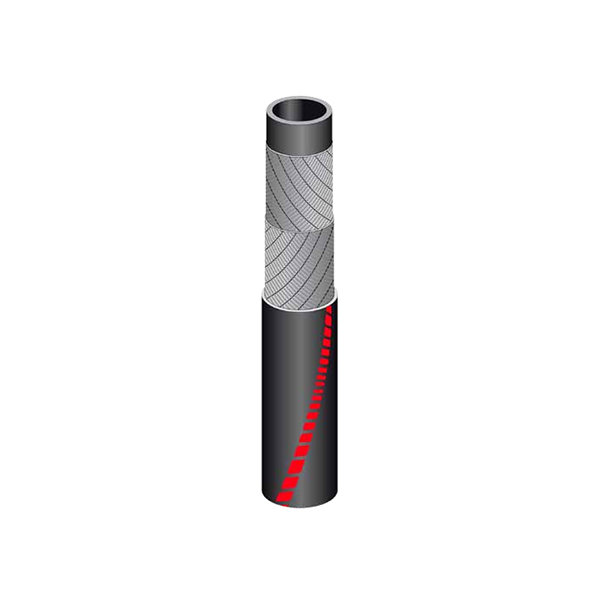
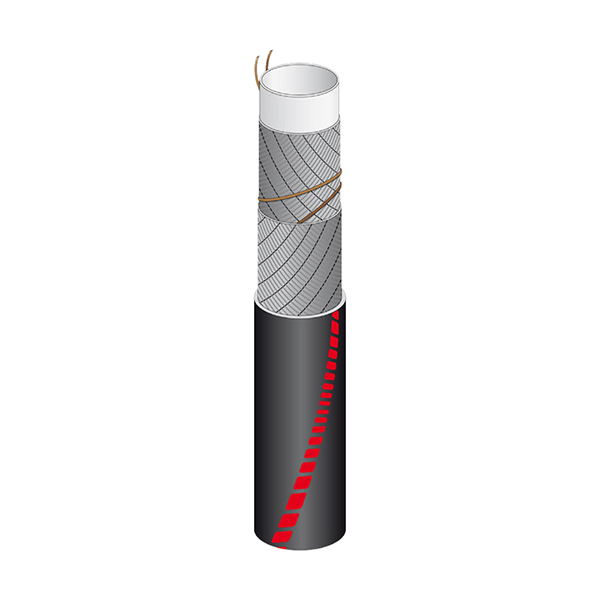
The construction of an industrial rubber hose is generally based on three main elements:
inner tube, reinforcement and outer cover. Each component plays a specific role in the overall
performance of the hose.
The inner tube determines product compatibility, the reinforcement provides pressure resistance and structural
stability, and the outer cover protects against abrasion, chemical agents, ozone and environmental conditions.
The quality and combination of these layers define the hose’s reliability in service.
Common rubber compounds and their performance
Industrial rubber hoses can be manufactured using different compounds, selected according to the application:
- EPDM, commonly used for steam, hot water and certain chemical applications.
- NBR, used in hoses for oils, fuels and hydrocarbons.
- SBR, frequently used in abrasion-resistant and general-purpose applications.
- Butyl (IIR) and other specific compounds, depending on particular requirements.
Final compatibility always depends on the compound formulation and the actual operating conditions.
Suction and delivery: a key difference
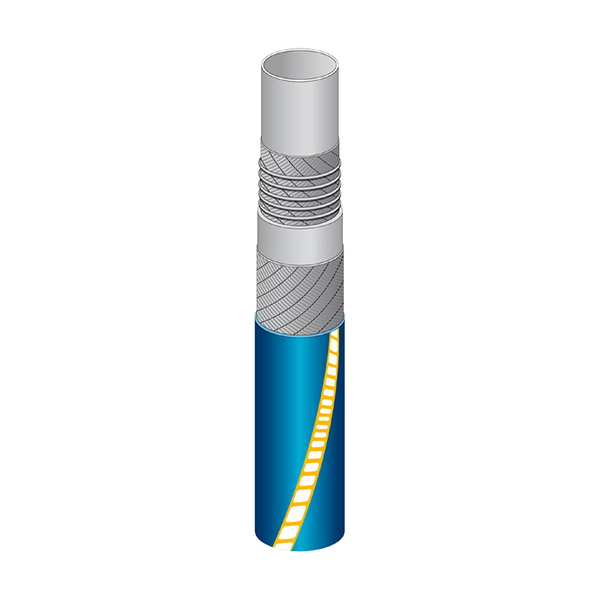
Not all rubber hoses are designed to operate under suction. When vacuum conditions are present,
the hose must incorporate specific reinforcements, such as metal spirals, to prevent collapse.
Correctly distinguishing between delivery and suction applications is essential to ensure hose service life
and system safety.
Highlighted applications in the Gassó rubber hose range
Gassó offers a broad range of industrial rubber hoses designed for specific applications,
including food-grade hoses, steam hoses, solutions for chemical products, abrasive materials and bitumen.
This application-driven approach makes it possible to select the most suitable rubber hose for each process,
avoiding generic solutions that may not meet real industrial requirements.
Connections, fittings and assembly: a complete solution
An industrial rubber hose must be part of a safe assembly that includes appropriate
fittings, couplings, flanges and fastening systems. An incorrect combination of components
can compromise safety even when the hose itself is correctly selected.
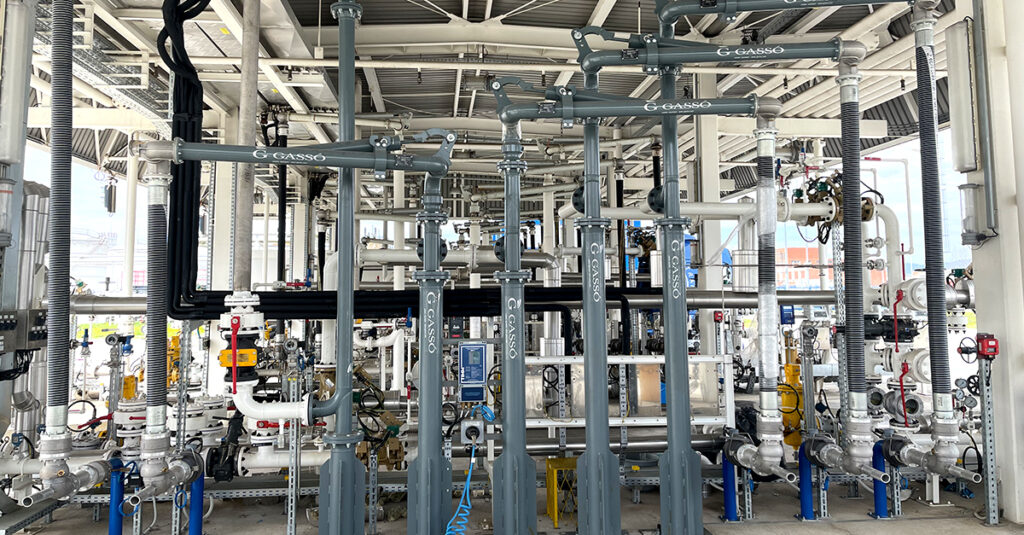
Gassó provides complete solutions that ensure compatibility between hoses and connections,
enabling safe and reliable integration into the installation.
Safety, standards and traceability
Many applications involving industrial rubber hoses are subject to specific standards,
particularly in sectors such as food processing, steam, chemical and hydrocarbons. Using hoses designed
to meet these requirements is essential for safe operation.
Traceability and technical documentation provide added value in regulated industrial installations.
Gassó experience and technical support
Gassó goes beyond product supply. Its experience in fluid transfer solutions allows it to offer
technical advice focused on selecting the most suitable industrial rubber hose for each application.
This technical support, combined with broad product availability, makes Gassó a reliable partner
for industrial installations that require service continuity and operational safety.
Gassó rubber hoses: a range for every industrial sector
The rubber hose range from Gassó covers a wide spectrum of industrial applications.
From general uses to highly demanding processes, Gassó’s industrial rubber hoses are designed to deliver
reliability, durability and safe performance in service.