What is the service life of an industrial hose? This is one of the most common questions asked on the factory floor, and the answer is clear: there is no set service life. A hose isn’t replaced based on how many years it’s been in use, but rather on its actual condition.
Industrial hoses are used in demanding conditions: high pressure, high temperatures, chemicals, and constant handling. Therefore, their durability depends directly on how they are used and maintained.
What determines the service life?
- Product type: Chemicals, abrasives, or cryogenic substances have different effects.
- Operating conditions: pressure, temperature, and daily usage cycles.
- Environment: UV radiation, corrosion, or harsh conditions.
- Handling: twisting, dragging, or improper use or handling.
- Maintenance: periodic preventive inspections and tests.
Two identical hoses can have completely different lifes
How do you know when to replace a hose?
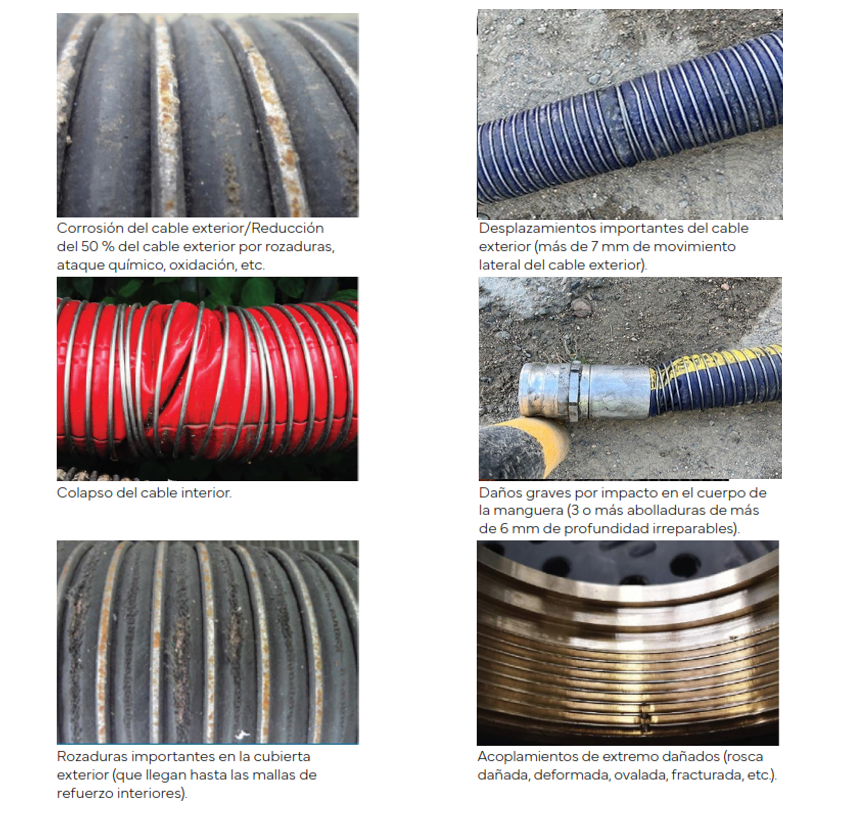
- Visual inspection: Scratches, cuts, and crush marks; dents, deep nicks, or creases; displacement of inner or outer wires; presence of corrosion or abrasion; and damage to or displacement of couplings.
- Technical tests: hydraulic tests at 1.5 times the working pressure for 5–10 minutes, depending on the application or specifications; leak testing; stability testing; and electrical continuity testing.
- Follow-up: loss of flexibility, repairs, or recurring failures.
Regulations and best practices do not specify a fixed service life, but rather recommend relying on periodic inspections and tests to ensure safety. The following are examples of hoses that are not suitable for use after a visual inspection:
How often should the hoses be maintained?
The frequency depends on each plant’s internal policy, but at Gassó we recommend at least one preventive maintenance check every 6 to 12 months, depending on the hazardous nature of the products and daily operations.
Safety audits at industrial plants:
In industrial safety audits, hoses in use are a critical issue.
What is required in an audit?
- Manufacturer’s Certificate
- Product compatibility and operating conditions
- Inspection Log
- Traceability and identification
- Evidence of tests conducted
Certification + review = compliance
Each hose must have:
✔ Original manufacturer’s certificate
✔ Documented periodic reviews
The key: preventive maintenance
The risk isn’t that a hose will fail, but rather that its condition isn’t monitored. Proper maintenance helps identify potential problems early, prevent leaks, and minimize downtime.
At Gassó, we help our customers manage the service life of their hoses by:
- On-site inspections at the plant
- Hydraulic and electrical conductivity tests
- Identification and traceability
- Certification in accordance with regulations
Discover our inspection and testing services: Gassó servies
We offer solutions designed for demanding applications:
View the GASSÓ product range: Gassó Portafolio
Longevity is not defined by time, but by self-control.
If you want to know whether your hoses are safe to use, we can help you inspect your system. We’ll assess your setup and provide you with clear recommendations within 48 hours.